

A plain-English UK guide to what "peptides for fat loss" really means, what drives fat loss, and which supplement ingredients people use to support a fat loss plan.
Contents
- What are peptides?
- What actually drives fat loss
- Supplement ingredients commonly used in a fat loss plan
- Where Lean Peptides fits in
- Losing fat while keeping muscle
- Frequently asked questions
1. What are peptides?
Strictly speaking, a peptide is a short chain of amino acids, the same building blocks that make up protein. Your body makes thousands of them, and you take in plenty more every day from the protein in your diet.
Online, though, "peptides for fat loss" has become a catch-all phrase. People use it to describe everything from collagen peptides and protein powders to branded supplements sold under a peptide name. That makes the search results confusing, and it is why it pays to look past the name of any product to what is actually in it.
For most people, the more useful question is what will genuinely help them lose fat, and which supplements can support that.
2. What actually drives fat loss
Every successful fat loss plan rests on the same foundations. No supplement replaces them, and the best supplements are designed to fit around them.
A sustained calorie deficit
Fat loss happens when you consistently take in less energy than you use. A moderate deficit you can keep up for months beats an aggressive one you abandon after three weeks.
Enough protein
Protein contributes to the maintenance of muscle mass, which matters more than ever when you are eating less. It is also filling, which makes a deficit easier to live with. Many people aim for each meal to be built around a good protein source.
Resistance training
Lifting weights gives your body a reason to hold on to muscle while you lose fat. The result is a leaner, more defined physique, where dieting alone tends to leave people smaller but softer.
Sleep and daily movement
Poor sleep makes hunger harder to manage, and everyday activity such as walking adds up to a meaningful share of the energy you use each day.
Consistency
For most people, the hardest part of fat loss is keeping the routine going week after week. Anything that makes it simpler and easier to stick to is worth having.
3. Supplement ingredients commonly used in a fat loss plan
These are the ingredients you will see most often in fat loss support supplements. Each links to our ingredient guide, which grades the research honestly so you can judge for yourself.
- Chromium. A trace mineral that contributes to normal macronutrient metabolism and the maintenance of normal blood glucose levels. Chromium picolinate is the form used in most research.
- Caffeine. The most widely used ingredient in the category. Many people use a measured dose before training, and it is worth tracking your total daily intake from coffee, tea and pre-workouts.
- Apple cider vinegar. Popular with people on a diet. Capsules offer a convenient alternative to drinking it, and the acetic acid content is what to look at on the label.
- Inulin. A prebiotic fibre, usually from chicory root, often included in formulas designed around meals.
- Yerba mate. A South American leaf traditionally drunk as a tea. It is a natural source of caffeine.
- Bitter melon. A fruit used in traditional cooking across Asia and widely included in botanical blends.
When comparing products, look for the dose of each ingredient per daily serving. A label that lists a long proprietary blend without amounts makes that impossible.
4. Where Lean Peptides fits in
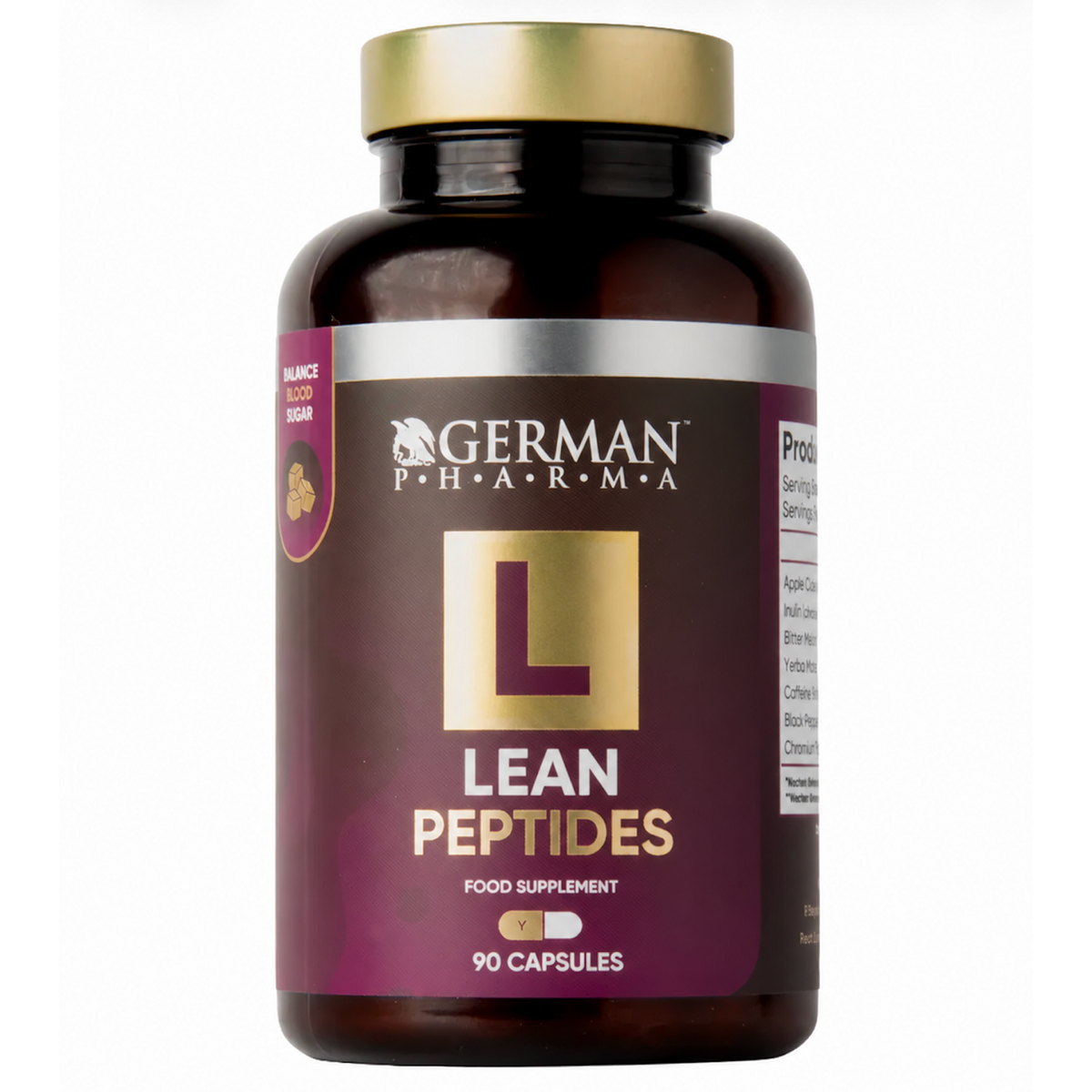
Lean Peptides is our daily fat loss support capsule, made by German Pharma. It is a botanical formula built on the ingredients above, with every dose listed on the label. A daily serving of three capsules provides:
- Apple cider vinegar (with the mother): 750mg
- Inulin (chicory root): 600mg
- Bitter melon: 300mg
- Yerba mate: 225mg
- Caffeine anhydrous: 150mg
- Chromium picolinate: 195µg
- Black pepper extract: 3mg
It is designed to slot into the routine described above: three capsules a day with meals, a measured caffeine dose, and chromium, which contributes to normal macronutrient metabolism. Most people take one capsule with each main meal.
5. Losing fat while keeping muscle
For anyone who trains, the goal is usually body recomposition: losing fat while holding on to the muscle you have worked for. Protein and resistance training do most of the work here.
Many of our customers pair Lean Peptides with Growth Peptides during a recomposition phase, using Lean Peptides alongside their fat loss plan and Growth Peptides to support their training. If you take both, take three capsules of each daily with food, and keep an eye on your total caffeine intake.
For more on choosing a training supplement, see our guide to muscle building tablets.
6. Frequently asked questions
Do peptides help you lose weight?
The term covers so many different products that there is no single answer. What reliably drives fat loss is a sustained calorie deficit, enough protein and regular training. A well-formulated supplement can make that routine easier to stick to, and it works best as part of a plan.
What is the best supplement for fat loss?
Look for a product with clearly dosed ingredients, a sensible amount of caffeine you can account for, and nothing hidden in a proprietary blend. Above all, choose something you will take consistently alongside your diet and training.
Can I take Lean Peptides and Growth Peptides together?
Yes. Many customers take both during a recomposition phase. Take three capsules of each daily with food, and remember that Lean Peptides provides 150mg of caffeine a day.
How long should I follow a fat loss plan before judging progress?
Give any plan at least six to eight weeks. Weekly weight naturally fluctuates, so track the trend over several weeks along with measurements and how your clothes fit.
Is Lean Peptides suitable for women?
Yes, it is suitable for adult men and women. Because of the caffeine content, it is not suitable during pregnancy or breastfeeding, or for anyone under 18.
This article is for information only and does not constitute medical advice. Food supplements should not be used as a substitute for a varied and balanced diet and a healthy lifestyle. If you take medication or have a medical condition, speak to your GP before using any supplement.

Leave a comment
All comments are moderated before being published.
This site is protected by hCaptcha and the hCaptcha Privacy Policy and Terms of Service apply.