

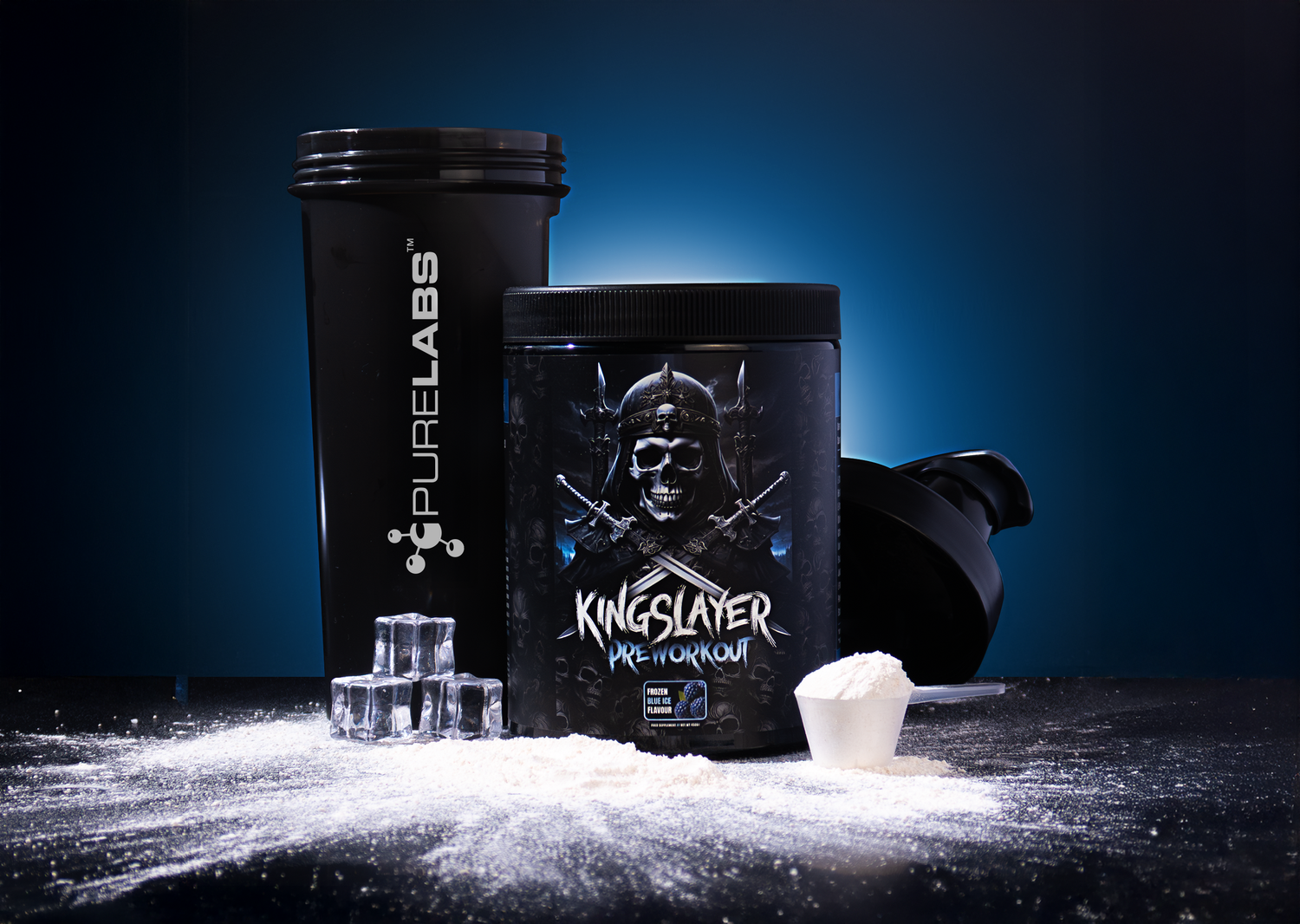
What is Pre-Workout? A Complete Guide to Ingredients, Benefits, and Use.
Whether you’re staring down a heavy leg day or trying to find the energy to train after a long day at work, we’ve all had sessions where motivation feels just out of reach. Pre-workout is designed to bridge that gap. Far more than just a caffeine hit, a well-formulated pre-workout acts as a strategic performance tool, combining specific ingredients to sharpen mental focus, increase muscular endurance, and deliver the blood flow needed to push through your most demanding sets.
However, with so many formulas on the market, it’s easy to feel overwhelmed by the hype. Understanding how these supplements work - from the tingle of beta-alanine to the science of nitric oxide boosters - is essential for getting the best results without the dreaded crash. In this comprehensive guide, we’re breaking down everything you need to know about pre-workout ingredients, timing, and safety to help you maximise every minute you spend in the gym.
Jump to:
- What is Pre-Workout?
- What does Pre-Workout do?
- How does Pre-Workout work?
- Is Pre-Workout good for you?
- When to take Pre-Workout?
- What are the side effects of Pre-Workout?
- What are the types of Pre-Workout?
- What ingredients are in a Pre-Workout?
- How much Pre-Workout should you take?
- How long does it take Pre-Workout to work?
- How long does Pre-Workout last?
- Can you take Pre-Workout every day?
- Do you need a Pre-Workout to train?
- Pre-Workout FAQs
- Is Pre-Workout right for you?
What is Pre-Workout?
Pre-workout is a supplement designed to help you feel more energised, focused, and prepared for exercise. It typically contains a combination of ingredients such as caffeine, amino acids, and performance-support compounds that work together to enhance both mental alertness and training performance.
Taken shortly before exercise, pre-workout can help increase motivation, delay fatigue, and support endurance, allowing you to train with greater intensity. While it doesn’t replace consistency or effort, it can complement a structured routine by helping you get more quality work from each session.
Pre-workout formulas can vary depending on ingredient profile and stimulant content. At Pro-Hormones, our pre-workout range includes options designed to support different training styles and preferences, whether you prefer a higher-stimulant formula or a more balanced approach.
What does Pre-Workout do?
Pre-workout is designed to enhance your performance before and during training. Its main purpose is to increase energy, focus, endurance, strength, and blood flow, helping you train harder and maintain intensity throughout your workout.
Most pre-workouts work by combining ingredients that target both the body and the mind. Stimulants like caffeine help increase alertness and reduce fatigue, allowing you to feel more switched on and ready to train. Performance ingredients such as beta-alanine and L-citrulline support muscular endurance and blood flow, contributing to better pumps and sustained output during resistance training.
In practical terms, a well-formulated pre-workout can help you:
- Push through heavy sets with more intensity.
- Maintain focus during longer sessions.
- Delay muscular fatigue.
- Improve overall training output.
Different formulas serve slightly different purposes. Some are designed to deliver a strong energy boost for high-intensity sessions, while others focus more on pump and endurance support without stimulants. This allows users to choose a product that aligns with their training style, tolerance, and goals.
Ultimately, pre-workout doesn’t replace proper nutrition, sleep, or programming, but when used correctly, it can be a valuable tool to maximise performance and get more out of each session.
How does Pre-Workout work?
Pre-workout works by combining specific performance-enhancing ingredients that target your central nervous system, muscles, and blood flow, all before you even begin training.
Most formulas work through three main mechanisms:
- Nervous System Stimulation: Ingredients like caffeine stimulate the central nervous system. This increases alertness, reduces the perception of fatigue, and helps you feel more mentally switched on. As a result, you may experience improved reaction time, focus, and motivation going into your session.
- Increased Blood Flow (The Pump Effect): Compounds such as L-citrulline help increase nitric oxide production in the body. Nitric oxide widens blood vessels, allowing more oxygen and nutrients to reach working muscles. This supports muscular endurance and contributes to the fuller pump feeling during resistance training.
- Improved Muscular Endurance: Ingredients like beta-alanine help buffer acid build-up in muscles during high-intensity exercise. This may allow you to perform more reps or maintain intensity for longer before fatigue sets in.
Is Pre-Workout good for you?
Pre-workout can be highly beneficial when used appropriately as part of a structured training routine. Whether it’s good for you depends on your goals, tolerance to stimulants, and the quality of the formula you choose.
For many lifters, a well-dosed pre-workout enhances energy, focus, strength output, and muscular endurance. This leads to more productive training sessions, higher intensity, and better long-term progress. When workouts feel stronger and more focused, consistency improves, and consistency is what drives real results.
However, not all pre-workouts are created equal. Some formulas overload stimulants without properly supporting performance, while higher-quality products balance ingredients for energy, pumps, endurance, and mental clarity.
At Pro-Hormones, our pre-workout range is designed to support serious training, whether you prefer a high-stim formula for maximum intensity or a more balanced option for smoother, sustained energy and enhanced blood flow. Choosing the right product for your caffeine tolerance and training schedule is essential, especially if you train later in the day.
As with any supplement, responsible use matters. Always follow recommended serving sizes; more isn’t better, and excessive stimulant intake can lead to jitters or sleep disruption.
In short, pre-workout can be a powerful performance enhancer when combined with proper nutrition, hydration, recovery, and structured programming. Used correctly, it helps you get more from every session, and that’s where real progress happens.
When to take Pre-Workout?
Timing your pre-workout correctly can make a noticeable difference in how effective it feels.
Most pre-workouts should be taken 20-30 minutes before training. This gives key ingredients, caffeine, beta-alanine, and citrulline, enough time to enter your system and begin working. By the time you start your first working set, energy levels, focus, and blood flow should be increasing.
Consider Your Training Time
If you train in the morning, a pre-workout can help shake off grogginess and elevate focus quickly.
If you train in the afternoon or evening, stimulant content becomes more important. High-stim formulas taken too late may interfere with sleep, which ultimately impacts recovery and performance. In this case, a more balanced or lower-stim option may be the smarter choice.
At Pro-Hormones, our pre-workout range includes options suited to different training times and stimulant tolerances, whether you want maximum intensity for heavy sessions or smoother, controlled energy for later workouts.
Should You Take Pre-Workout With Food?
Pre-workout can be taken with or without food, but it may affect how quickly and strongly you feel the effects.
Taking it on an empty stomach usually leads to faster absorption and a stronger energy boost. However, for some people, especially those sensitive to caffeine, this can increase the risk of jitters or stomach discomfort.
Having a light meal 60–90 minutes before training can help provide more stable energy and reduce digestive issues. A small combination of carbs and protein is often ideal. On the other hand, taking pre-workout immediately after a large meal may slow absorption, meaning the effects take longer to kick in.
Ultimately, the best approach comes down to personal preference, digestion, and stimulant sensitivity.
Do You Need Pre-Workout Every Session?
Not necessarily. Some athletes reserve pre-workout for:
- Heavy strength days (your most demanding lifts/muscle groups: chest, back, legs).
- Intense leg sessions.
- High-volume hypertrophy workouts.
- Days when energy or motivation is low.
- Chasing the pump.
Using it strategically can help maintain sensitivity to stimulants while still maximising performance when it matters most.
In short, take pre-workout 20–30 minutes before training, match the formula to your schedule and tolerance, and use it as a tool to enhance, not replace, strong training fundamentals.
What are the side effects of Pre-Workout?
Pre-workout is generally safe when used as directed. Most side effects are linked to stimulant content, particularly caffeine, rather than the performance ingredients themselves.
Common Pre-Workout Side Effects:
- Jitters or restlessness: Typically caused by higher caffeine intake or low stimulant tolerance.
- Increased heart rate: A normal response to stimulants that elevate alertness and energy.
- Sleep disruption: More likely if taken later in the day due to caffeine’s long half-life.
- Tingling sensation: A harmless and temporary effect of beta-alanine.
- Digestive discomfort: Can occur when taken on an empty stomach or in excessive doses.
How to Minimise Pre-Workout Side Effects
Start with a half serving to assess tolerance, especially if you’re new to pre-workout. Avoid combining it with other caffeine sources, stick to the recommended dose, and choose a formula that aligns with your stimulant sensitivity and training time.
At Pro-Hormones, our pre-workout range focuses on balanced, performance-driven formulas rather than excessive stimulant loading, helping you maximise results without unnecessary side effects.
When used responsibly, pre-workout is a safe and effective tool to support intense, productive training sessions.
What are the types of Pre-Workout?
Pre-workouts vary in stimulant level, ingredient focus, and overall intensity. Choosing the right type depends on your goals, training time, and caffeine tolerance.
High-Stimulant Pre-Workout
High-stim formulas are designed for maximum energy, aggression, and mental drive. They typically contain higher doses of caffeine alongside additional focus-enhancing ingredients.
High-stimulant pre-workouts are best for:
- Heavy strength sessions.
- PR attempts.
- Intense leg days.
- Experienced users with higher stimulant tolerance.
They deliver strong performance benefits but may increase the risk of jitters or sleep disruption if used late in the day.
Moderate/Balanced Pre-Workout
These formulas provide a more controlled energy boost while still supporting endurance, pumps, and focus. They aim to balance performance enhancement without overwhelming stimulant levels.
Balanced pre-workouts are best for:
- Moderate energy boost and mental engagement.
- Daily training.
- Hypertrophy sessions.
- Users wanting steady, sustained energy.
This is often the most practical option for consistent use.
Non-Stimulant (Pump) Pre-Workout
Stim-free formulas contain no caffeine and instead focus on improving blood flow, muscle pumps, and endurance through nitric oxide-supporting ingredients like citrulline.
Non-stimulant pre-workouts are best for:
- Evening workouts.
- Stimulant-sensitive individuals.
- Stacking with coffee, energy drinks or fat burners.
These enhance performance without affecting sleep or heart rate.
At Pro-Hormones, our pre-workout range includes options across these categories - allowing you to choose the right formula for your training style rather than relying on a one-size-fits-all approach.
What ingredients are in a Pre-Workout?
Pre-workout formulas aren’t just random ingredient blends - they’re typically built around three core performance goals: energy, blood flow (pumps), and endurance/focus. The best formulas combine ingredients that work together to support multiple performance pathways at once.
Energy & Mental Focus Ingredients
These ingredients stimulate the central nervous system to increase alertness, reaction time, and motivation.
Why they’re included: To help you train harder, stay focused between sets, and maintain intensity throughout your workout.
Common examples:
- Caffeine: Increases energy, alertness, and power output.
- L-Theanine: Often paired with caffeine to smooth out energy and reduce jitters.
- Tyrosine: Supports focus and cognitive performance under stress.
When combined properly, these ingredients can provide a strong but controlled energy boost - rather than a sudden spike and crash.
Pump & Blood Flow Ingredients (Nitric Oxide Boosters)
These ingredients increase nitric oxide production, which improves blood flow to working muscles.
Why they’re included: Better blood flow means improved oxygen and nutrient delivery, enhanced muscle pumps, and potentially better endurance.
Common examples:
- L-Citrulline / Citrulline Malate: Converts into arginine, boosting nitric oxide production.
- Arginine: Direct nitric oxide precursor (though citrulline is often more effective).
- Nitrates: Further support vascular dilation.
These ingredients are often stacked together because they support the same pathway in complementary ways, leading to fuller muscle pumps and improved training performance.
Endurance & Fatigue-Reduction Ingredients
These ingredients help delay muscular fatigue and improve work capacity.
Why they’re included: To allow you to perform more reps, maintain strength across sets, and sustain higher training volume.
Common examples:
- Beta-Alanine: Helps buffer acid build-up in muscles, delaying fatigue.
- Betaine: May support power output and muscular endurance.
- Taurine: Supports hydration and muscular function.
Beta-alanine and pump ingredients often work well together - one delays fatigue internally, while the other improves circulation and nutrient delivery.
Amino Acids & Performance Support
Many pre-workouts include specific amino acids that play multiple roles in performance.
Branched-Chain Amino Acids (BCAAs) like leucine, isoleucine, and valine may support muscle recovery and reduce muscle breakdown during training.
Essential Amino Acids (EAAs) provide the full spectrum needed for muscle protein synthesis.
Certain amino acids, like citrulline, taurine, and tyrosine, can also overlap across categories, supporting pumps, hydration, and focus simultaneously. This is where intelligent formulation matters: ingredients should complement each other, not simply inflate a label.
How These Ingredients Work Together
A well-designed pre-workout stacks ingredients strategically:
- Stimulants increase drive and intensity.
- Nitric oxide boosters enhance blood flow.
- Endurance ingredients delay fatigue.
- Amino acids support muscle function and recovery.
When properly dosed, these categories work hand in hand, allowing you to train harder, for longer, with better output.
How much Pre-Workout should you take?
The correct dose of pre-workout depends on the formula, your stimulant tolerance, and your training experience. However, the most important rule is simple: Always follow the serving size listed on the label.
Most pre-workouts are designed to be effective at one full scoop, but that doesn’t mean everyone should start there.
If you are new to Pre-Workout
Start with ½ a scoop to assess tolerance, especially if the formula contains 200mg+ of caffeine.
This allows you to evaluate:
- Energy response.
- Heart rate changes.
- Focus levels.
- Any digestive discomfort.
If you tolerate it well, you can increase to a full serving.
If you are an Experienced Pre-Workout User
You may be comfortable using a full serving, particularly with balanced formulas. However, exceeding the recommended dose is not advised.
More does not mean:
- More muscle growth.
- More fat loss.
- Better results.
It usually just means higher stimulant intake, and a greater chance of side effects.
Be mindful of total Caffeine intake
Remember to factor in:
- Coffee.
- Energy drinks.
- Fat burners.
- Other supplements containing caffeine.
For most healthy adults, total daily caffeine intake should generally stay within moderate limits. Doubling up on stimulants unintentionally is one of the most common mistakes.
Smart Usage Strategy
Many experienced lifters use pre-workout strategically:
- Heavy compound days.
- Leg sessions.
- High-volume hypertrophy training.
- Low-energy days.
This helps maintain stimulant sensitivity while maximising performance when it matters most.
In short, start low, assess tolerance, stick to the label, and use it as a performance tool, not a crutch.
How long does it take Pre-Workout to work?
Most pre-workouts begin working within 20-30 minutes. That’s why the standard recommendation is to take it about half an hour before your workout. However, timing can vary depending on several factors including:
Stimulant Type and Dose
Caffeine anhydrous is absorbed quickly, so energy and alertness may increase within 15-30 minutes. Formulas that combine multiple caffeine sources (such as di-caffeine malate or caffeine citrate) often provide a smoother, longer-lasting release.
Food Intake
Taking pre-workout on an empty stomach usually leads to faster absorption. A large meal beforehand can slow digestion and delay the effects.
Individual Tolerance
Some people feel the effects quickly and intensely, while others experience a slower build-up depending on metabolism and stimulant sensitivity.
Formula Design
High-stim products typically feel noticeable sooner due to caffeine. Pump-focused or non-stimulant formulas build more gradually as nitric oxide levels increase and blood flow improves.
Dry Scooping vs Mixing With Water
Dry scooping, consuming the powder without water, became popular on social media, but it does not make pre-workout work faster or stronger.
In fact:
- Your body still needs to digest and absorb the ingredients.
- Powder can cause coughing or throat irritation.
- It may increase the risk of taking too much too quickly.
Mixing pre-workout with water allows for proper dilution, smoother digestion, and more consistent absorption. It’s the safer and more effective method.
There is no performance advantage to dry scooping, just unnecessary risk.
What You’ll Feel First in Pre-Workout
- Increased alertness and focus.
- A rise in energy.
- Tingling from beta-alanine.
- Gradual muscle fullness as blood flow increases.
Practical tip: Take your pre-workout 20-30 minutes before your first working set, mix it properly with water, and adjust timing slightly based on your digestion and tolerance.
Used correctly, it should enhance your session, not distract from it.
How long does Pre-Workout last?
Pre-workout duration can be looked at in two ways:
- How long you feel it during your workout
-
How long the ingredients stay active in your body
Both are important, especially when managing energy levels and sleep.
How Long Does Pre-Workout Last During a Workout?
For most people, the effects of a pre-workout supplement typically span 1.5 to 3 hours, with energy and focus reaching their peak within the first 60 to 90 minutes. This timeline is ideal for the average gym session, as a properly dosed formula ensures you are covered from your first warm-up to your final cool-down.
While endurance-based ingredients like beta-alanine and betaine work to sustain performance across multiple sets, pump ingredients such as citrulline and nitrates keep blood flow elevated throughout the entire workout. Ultimately, the intensity of the experience depends on the formula; high-stimulant blends tend to feel more potent and long-lasting, whereas lower-stim options offer a smoother, more controlled boost.
How Long Does Pre-Workout Stay In Your Body?
The duration of a pre-workout’s impact is primarily dictated by caffeine, which carries a half-life of roughly 4 to 6 hours in most adults. This means that if you consume 300mg at 5pm, roughly 150mg - the equivalent of a strong cup of coffee - is still active in your system between 9pm and 11pm.
While other ingredients like beta-alanine and creatine rely on long-term muscle saturation rather than immediate spikes, and pump ingredients act strictly within the training window, stimulants linger far longer. Consequently, while you can expect performance benefits to last 2 to 3 hours, the systemic effects of stimulants remain active well after your session; to protect your sleep, it is best to avoid high-stim formulas within 6 to 8 hours of bedtime.
Can you take Pre-Workout every day?
While it is physically possible to take pre-workout every day, whether you should depends on your stimulant tolerance, total caffeine intake, and training goals. The primary factor to consider is how your body adapts to consistent use.
The Main Concern: Stimulant Tolerance
Most pre-workouts rely heavily on caffeine. When consumed daily, your body gradually adapts, leading to several key issues:
- Diminishing Returns: Over time, the same dose feels less effective, and you may lose that initial kick or surge in focus.
- Increased Dosage: You might feel tempted to increase the serving size to achieve the same feeling, which can lead to excessive caffeine consumption.
- Harder Crashes: As your tolerance builds, the post-workout energy crash can become more noticeable and disruptive to your day.
- Dependency: Relying on high-stimulant formulas daily can reduce their overall impact, making you feel sluggish on days you train without them.
Taking pre-workout every single day is possible, but using it strategically rather than automatically is the best way to ensure it actually works when you need it most. Many experienced lifters follow a more nuanced approach to keep their performance high without burning out their nervous system.
A Smarter Approach to Daily Use
Instead of taking the same dose every session, consider these three common strategies:
- Cycle High-Stim Formulas: Save the high-caffeine heavy hitters for your most demanding sessions, such as leg days or PR attempts. Use lighter options or skip the stims for easier recovery days.
- Rotate with Pump or Low-Stim Options: On less intense days or evening sessions, switch to a formula focused on blood flow and hydration. This maintains your performance markers without overloading your caffeine receptors.
- Take Occasional Breaks: A short 1-2 week washout period from caffeine every few months can help reset your sensitivity, making your supplements feel like new again.
What About Non-Stimulant Pre-Workouts?
Stim-free or pump formulas are much more suitable for daily use. Because they focus on blood flow, endurance, and hydration rather than central nervous system stimulation, they don't carry the same risk of tolerance or sleep disruption.
Do you need a Pre-Workout to train?
No, you do not need a pre-workout to train effectively. Muscle growth, strength gains, and overall fitness improvements come from structured programming, progressive overload, proper nutrition, quality sleep, and long-term consistency. Supplements can support performance, but they are not the foundation of results.
That said, pre-workout can be a useful tool in certain situations. Early morning sessions, long days at work, heavy compound lifts, high-volume hypertrophy workouts, or personal record attempts are all scenarios where an energy and focus boost can make a noticeable difference. Ingredients such as caffeine can increase alertness and drive, citrulline can enhance blood flow and muscle pumps, and beta-alanine can help delay fatigue during intense sessions.
Some people use coffee instead, which can certainly help due to its caffeine content. However, a well-formulated pre-workout typically combines energy support with pump ingredients, endurance enhancers, and focus compounds. This layered approach can improve overall training performance beyond what caffeine alone provides.
The key is mindset. Pre-workout should enhance your training, not become something you feel dependent on. If you find that you cannot train without it, reducing frequency or taking a short break may help restore sensitivity. At Pro-Hormones, we position pre-workout as a strategic performance tool, whether that means a high-stim option for maximum intensity or a pump-focused formula for added performance without heavy stimulation.
In short, you don’t need pre-workout to make progress. But when used intelligently, it can help you get more out of the sessions that matter most.
Pre-Workout FAQs
Is Pre-Workout safe?
For most healthy adults, pre-workout is safe when used as directed. Issues typically arise from excessive stimulant intake or exceeding recommended serving sizes. Always check the label, assess your tolerance, and avoid stacking multiple high-caffeine products together.
Can beginners take Pre-Workout?
Yes, but beginners should start cautiously. A half serving is usually the best approach to assess tolerance, especially with stimulant-based formulas. Learning proper training fundamentals should always come first, with supplements added strategically.
Will Pre-Workout help build muscle?
Pre-workout doesn’t directly build muscle. However, by increasing energy, focus, blood flow, and endurance, it can help you train harder and maintain higher intensity - which contributes to better long-term progress.
Can you take Pre-Workout on rest days?
It’s not necessary. Most people reserve pre-workout for training sessions. On rest days, stimulant intake can be reduced to help maintain sensitivity and support recovery.
Does Pre-Workout burn fat?
Pre-workout is not a fat burner. While caffeine can slightly increase calorie expenditure and energy output, fat loss primarily comes from a calorie deficit and consistent training.
Can Pre-Workout affect sleep?
Yes, especially high-stimulant formulas. Caffeine can remain active in the body for several hours, so taking pre-workout too late in the day may interfere with sleep quality.
Is stim-free Pre-Workout effective?
Yes. Non-stimulant formulas focus on blood flow, endurance, and hydration rather than energy stimulation. They’re ideal for evening training or those sensitive to caffeine.
Is Pre-Workout right for you?
Deciding if pre-workout is right for you depends on whether you view it as a strategic performance tool rather than a daily necessity. It is an ideal choice if you are looking to bridge the gap between low motivation and high-intensity training, as it combines central nervous system stimulants for focus with performance-driven ingredients that delay muscular fatigue and enhance blood flow. For lifters tackling demanding sessions like heavy leg days or personal record attempts, a well-formulated pre-workout can provide the mental edge and physical endurance needed to maintain peak output from the first set to the last.
However, its suitability ultimately hinges on your lifestyle and how your body processes stimulants. If you are sensitive to caffeine or frequently train in the evening, a high-stimulant formula might do more harm than good by disrupting the sleep essential for muscle recovery. While pre-workout isn't a requirement for making progress - which is driven primarily by consistency, nutrition, and sleep - it is a highly effective asset for those who want to maximise their training quality.
Explore the Pro-Hormones pre-workout range.

Leave a comment
All comments are moderated before being published.
This site is protected by hCaptcha and the hCaptcha Privacy Policy and Terms of Service apply.